Bedding · Fabric Care
Choosing Naturepedic Linen Sheets: Fit, Feel, and Fabric Weight
A good linen sheet is more than a fiber label. Mattress depth, fabric weight, weave, and laundering habits all shape how it feels and performs. Here’s how to evaluate Naturepedic organic linen sheets—from pocket depth to the gradual softening that gives linen its lived-in character.
Before a linen sheet reaches the bed, it has already crossed several landscapes: flax fields, spinning and weaving, finishing, and the practical geography of a bedroom. The last part matters more than it may seem. A fitted sheet that cannot stretch over a mattress and topper will tug at its corners all night; fabric that feels too heavy or too crisp may not suit a sleeper’s preferences, even when its fiber is appealing.
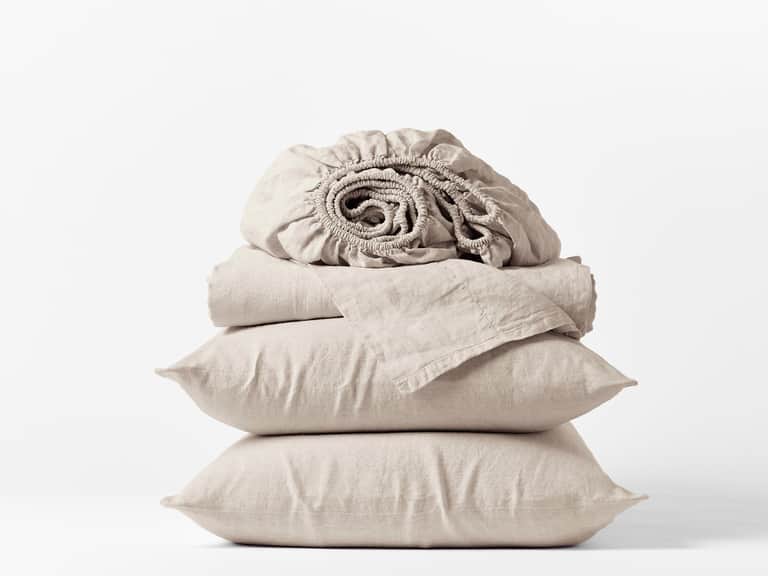
Naturepedic’s organic linen bedding offers a useful case study in making a considered choice. The sheets are described as GOTS-certified organic linen made from flax grown in France, with a reported fabric weight of 185 grams per square meter. The fitted sheet has a 15-inch pocket, while the fabric is stone-washed and intended to soften with use. These details provide a starting point—not a guarantee that every sleeper or mattress will be a perfect match.
To choose well, look beyond the word “linen.” Measure the bed as it is actually used, consider how a fabric’s weight relates to your comfort, and follow the care instructions attached to the specific set. Those simple steps can help turn an appealing textile into bedding that works in everyday life.
Start with the mattress, not the label
Fitted sheets are designed around a mattress’s length, width, and depth. In practice, though, the bed may include a mattress protector, a padded topper, or another layer that adds height. The relevant measurement is therefore the depth of the entire sleep surface the sheet must cover—not the mattress depth printed on an old receipt.
Measure from the bottom edge of the mattress to the top surface, including any layers that will remain beneath the sheet. Take the measurement at more than one point if the mattress has a pillow top or a visibly uneven profile. Then compare that number with the fitted sheet’s stated pocket depth, leaving a little room for fabric to wrap under the corners and for movement during sleep.
The Naturepedic organic linen sheet information lists a 15-inch pocket. That figure is a helpful reference, but it should not be treated as a precise fit for every bed described as 15 inches deep. Mattress shapes differ, and the way a manufacturer measures a pocket can affect how much usable depth remains once the sheet is stretched into place. If your mattress and topper together approach the listed depth, check the product’s current sizing guidance before deciding.
What a secure fit looks like
A properly fitted sheet should lie smoothly across the top without putting severe tension on the corners. The elastic should hold the sheet in place, not carry the full burden of stretching it beyond its intended range. At the same time, excess fabric can bunch beneath the sleeper, making the surface feel less even. Both problems are easier to prevent with a tape measure than to solve after laundry day.
- Measure all added layers. Include the mattress protector and topper if they stay on the bed.
- Check each dimension. Confirm the sheet size matches the mattress width and length as well as its depth.
- Allow for the underside. A pocket needs enough material to cover the top and sides and still grip beneath the mattress.
- Recheck after washing. Follow care directions and inspect the fit once the sheet is clean and dry.
If the corners repeatedly pull free, first confirm that the sheet is oriented correctly and that the mattress dimensions match the selected size. If the sheet is consistently under strain, the pocket may be too shallow for the complete bed setup. A larger pocket is not automatically better, however: excess depth can also lead to a loose, shifting fit on a lower-profile mattress.
How to interpret linen fabric weight
Fabric weight is one clue to a textile’s character, but it is not a direct comfort score. Naturepedic lists its organic linen at 185 gsm—grams per square meter, a measure of the mass of a given area of fabric. The number can help shoppers compare specifications, provided they understand that weight alone does not describe softness, breathability, durability, or how a sheet will feel after washing.
Two fabrics with the same weight can feel different because of yarn thickness, weave structure, finishing, and the way the cloth has been washed or treated. A linen’s texture also changes with use. Stone-washing, as described for the Naturepedic sheets, is a finishing process intended to give fabric a softer, more relaxed hand. It does not remove the characteristic texture of linen, nor does it mean every person will experience the same degree of softness.
Think of fabric weight as one part of a larger description. A substantial hand may appeal to someone who likes a sheet with noticeable presence and a relaxed drape. A sleeper who prefers very lightweight, slick-feeling bedding may have a different response. The most useful comparison pairs weight with the product’s construction, finishing details, care instructions, and—when available—a chance to feel the fabric before buying.
Weight is not thread count
Thread count and fabric weight measure different things. Thread count refers to the number of threads in a defined area of woven fabric, while gsm measures the mass of that area. For linen, a thread-count comparison with cotton can be especially unhelpful if it is treated as a universal ranking system. Fiber length, yarn quality, weave, and finishing all contribute to the result. A higher number by itself does not establish that one sheet will feel better or last longer.
When a brand provides a clear weight, fiber description, origin information, and care guidance, use those facts together. For the Naturepedic sheets, the stated combination is organic flax linen at 185 gsm, stone-washed for a softer hand, with a breathable, substantial feel. This is more informative than trying to infer comfort from one specification in isolation.
Feel, airflow, and temperature comfort
Linen is made from flax fibers, and its woven structure can allow air and moisture to move through the fabric. Naturepedic describes its linen sheets as breathable and moisture-wicking, with comfort intended for changing seasons. These properties make linen an appealing choice for people who dislike bedding that feels close or clammy, although the sensation on a particular night depends on more than the sheet itself.
Room temperature, humidity, sleepwear, blankets, mattress materials, and individual temperature preferences all influence perceived comfort. A breathable sheet cannot control a warm room, and no fabric can promise the same experience for every sleeper. Linen can feel cool to the touch in some conditions and pleasantly substantial in others; the surrounding bedding system and the body beneath it matter.
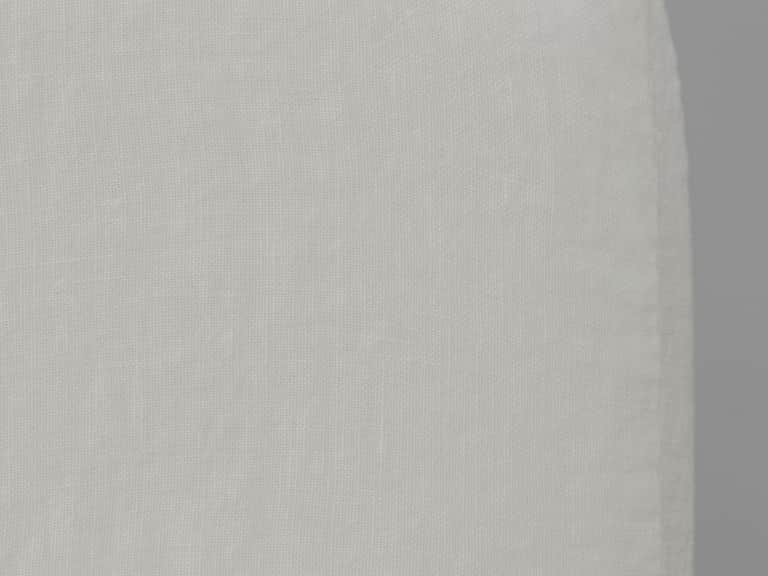
Texture is another part of the decision. Linen is not usually chosen for a perfectly smooth, polished surface. Its subtle irregularities are part of its appeal, and a relaxed linen sheet may become softer with repeated laundering without losing all of its visible character. If your preference is a crisp, uniform hand, compare linen with cotton percale before choosing. If you enjoy natural texture and a fabric that changes gradually, linen may suit you well.
What organic certification can—and cannot—tell you
Naturepedic identifies these sheets as GOTS-certified organic and describes the flax as grown in France. The certification is relevant to shoppers looking for information about organic textile processing and production requirements. It is a useful sourcing signal, but it does not tell you whether the fitted sheet will fit your mattress, whether its texture will feel comfortable to you, or how long it will last under a particular laundry routine.
It is also worth distinguishing the stages in a textile’s journey. Fiber growing, spinning, weaving, dyeing, finishing, and final assembly can take place in different locations. A product description may identify some of these details, but shoppers should avoid assuming that a stated fiber origin means every stage occurred in the same country. Read the full product information and certification details when provenance is important to your decision.
Certification and comfort answer different questions. One concerns documented production standards; the other is a personal experience shaped by fit, touch, temperature, and care. A sound buying decision makes room for both without treating either as a substitute for the other.
Care that preserves the fabric’s character
Linen is durable, but durability depends partly on how it is washed and dried. Care labels should take priority because finishing treatments and product construction vary. Naturepedic’s supplied guidance for its organic linen sheets calls for machine washing in warm water, tumble drying on low, warm ironing if desired, and no bleach. Follow the instructions attached to the set you own, since care directions can change between product versions.
For everyday laundering, avoid crowding the washer. Fabric needs space to move through water and rinse clean; an overfilled drum can encourage twisting and friction. Use an appropriate amount of detergent, and separate colors as needed, especially when washing a new or deeply colored set. High heat and over-drying can be harder on fibers than a low-temperature, timely drying cycle.
Softener is not always necessary. Linen is valued for its natural hand and may soften through regular washing. If a care label advises against a product or treatment, follow that direction rather than adding it in pursuit of extra softness. Remove sheets promptly at the end of the cycle to limit deep creasing, then fold them or put them back on the bed. An iron is optional if a relaxed, naturally rumpled finish is part of the appeal.
A simple care routine
- Read the sewn-in label and the current manufacturer instructions before the first wash.
- Wash sheets with similar colors and avoid overloading the machine.
- Use the recommended water temperature and a measured amount of detergent.
- Tumble dry on the instructed low setting, and remove the sheets before they become over-dry.
- Iron only if you prefer a smoother finish and the care directions permit it.
A practical checklist before choosing
Buying sheets often involves a small chain of decisions. Work through them in order, beginning with the bed itself. A beautiful fabric cannot compensate for a fitted sheet that will not stay on the mattress, while a useful specification has little value if the sheet’s texture is not right for you.
- Measure the complete sleep surface. Include toppers and protectors that will remain in place.
- Compare the pocket depth. Naturepedic lists a 15-inch pocket; verify that the exact sheet size and current product details suit your setup.
- Consider the fabric weight. The listed 185 gsm signals a substantial linen, but does not independently predict softness or warmth.
- Think about texture. Linen has a naturally textured hand; stone-washing is intended to make this particular fabric feel more relaxed.
- Review the care routine. Make sure the washing and drying instructions work with the way you do laundry.
- Check the set contents and dimensions. Confirm which pieces are included and that pillowcase sizes match your pillows.
For shoppers comparing specifications, the Naturepedic Organic Linen Sheets listing provides details including the 185 gsm GOTS-certified organic flax fabric, available sheet sizes, a 15-inch fitted-sheet pocket, and care directions. Check the current listing for the exact size configuration and product information before ordering.
Questions to ask about linen sheet fit and feel
Will a 15-inch pocket fit a 15-inch mattress?
It may, but a number alone does not guarantee a secure fit. Include any mattress protector or topper in your measurement and check the manufacturer’s sizing guidance. You may need extra fabric to wrap beneath the mattress, depending on its shape and the sheet’s construction.
Does 185 gsm mean the sheets will feel warm?
Not by itself. The figure describes fabric mass per unit area, not a complete measure of warmth or breathability. Weave, finishing, room conditions, and personal preference also affect how a sheet feels. Naturepedic describes its linen as breathable and suitable for year-round use, but individual comfort varies.
Will linen become softer over time?
Linen commonly softens with repeated washing and use. Naturepedic describes its sheets as stone-washed and as becoming softer with washing. The exact change depends on the fabric and how it is cared for; follow the product’s care instructions to avoid unnecessary wear.
Should linen sheets be ironed?
That is a matter of preference. A relaxed, slightly rumpled surface is characteristic of many linen bedding styles. The supplied Naturepedic care guidance permits warm ironing if desired, but the label on your own set should be the final reference.
The best choice is the one that works at home
Choosing Naturepedic linen sheets is an exercise in matching material to place and routine. A 15-inch pocket is meaningful only in relation to the measured bed. A weight of 185 gsm gives a useful sense of the fabric’s substance, but its hand, weave, and finishing complete the picture. Organic certification and flax origin offer sourcing context; the care label explains how to look after the finished textile.
Take measurements before shopping, consider whether natural texture suits your preferences, and think honestly about your laundry habits. Linen rewards a little attention: enough room in the washer, moderate drying, and care guided by the label. In return, its character can deepen through use, becoming part of the familiar landscape of the bedroom—not just a specification on a tag, but a fabric experienced night after night.